
I love watching kids’ news programs with my little boy. One evening, while we were tuned in, the program covered the famine situation in Sudan.
“Did China ever have famines?” my curious little boy asked. Those innocent words immediately transported me back to a memory of a peasant family we once encountered at a roadside noodle shop—a memory that still lingers with me to this day.
Back in the early 1970s, my grandmother used to prepare communal dinners for our extended family. Each family would contribute to the cost of the meal. Dining out was a rare luxury for us, as our budget was tight, and every cent was precious.
One evening, we missed the communal dinner, so we decided to dine at a local noodle shop instead. The place may have been shabby, but it was filled with the comforting warmth of steam. In the kitchen, three pots were hard at work: the first pot held boiling water for cooking the noodles, the second contained cold water for cooling and rinsing the noodles (a process known as “crossing the cool bridge”), and the third was filled with hot broth. We settled into our wobbly wooden chairs and eagerly dug into our bowls of noodles. The meal was simple—just noodles with a few green shallots floating on top of plain broth. But for a young girl and her weary mother, it was a rare and prestigious treat.
Suddenly, a mother and her children, clad in ragged clothing, approached our table. They stood out amidst the urban crowd, with their dark, weathered skin and a ruggedness that spoke of days toiling in the fields. They appeared dirty and dishevelled, as if they had been living on the streets for weeks. They conversed among themselves in a dialect foreign to my ears, likely from a distant province where their crops had failed. Their hungry eyes spoke volumes. The children eagerly consumed some leftover soup from a neighbouring table before turning their attention to our bowls.

“Finish all your food,” my mother admonished me with a stern tone. As I took the last bite and placed my bowl aside, my mother picked it up and carefully slurped every remaining drop of soup. The family that had approached us earlier had already moved to another table, their expressions frozen. A heavy feeling settled in my heart.
Years passed, yet my memories of that destitute family remained vivid. I found myself perplexed by my mother’s apparent lack of empathy for those children. After all, she had grown up an orphan, and one would assume she understood the pain and suffering that came with hunger, homelessness, and helplessness.
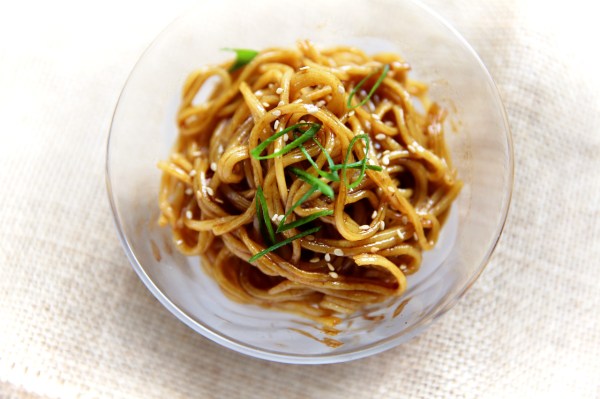
That following weekend, I embarked on a mission to make a large batch of noodles from scratch. I tossed the freshly made noodles with a dash of soy sauce and a drizzle of sesame oil.
From that point on, I began cooking for the homeless community regularly. Life had been kind to our family, and we were determined to share our good fortune and food with those in need.
Ingredients
To make the noodle dough, you will need:
- 2.5 cups of all-purpose flour (plus more for dusting)
- 1 cup of hot water
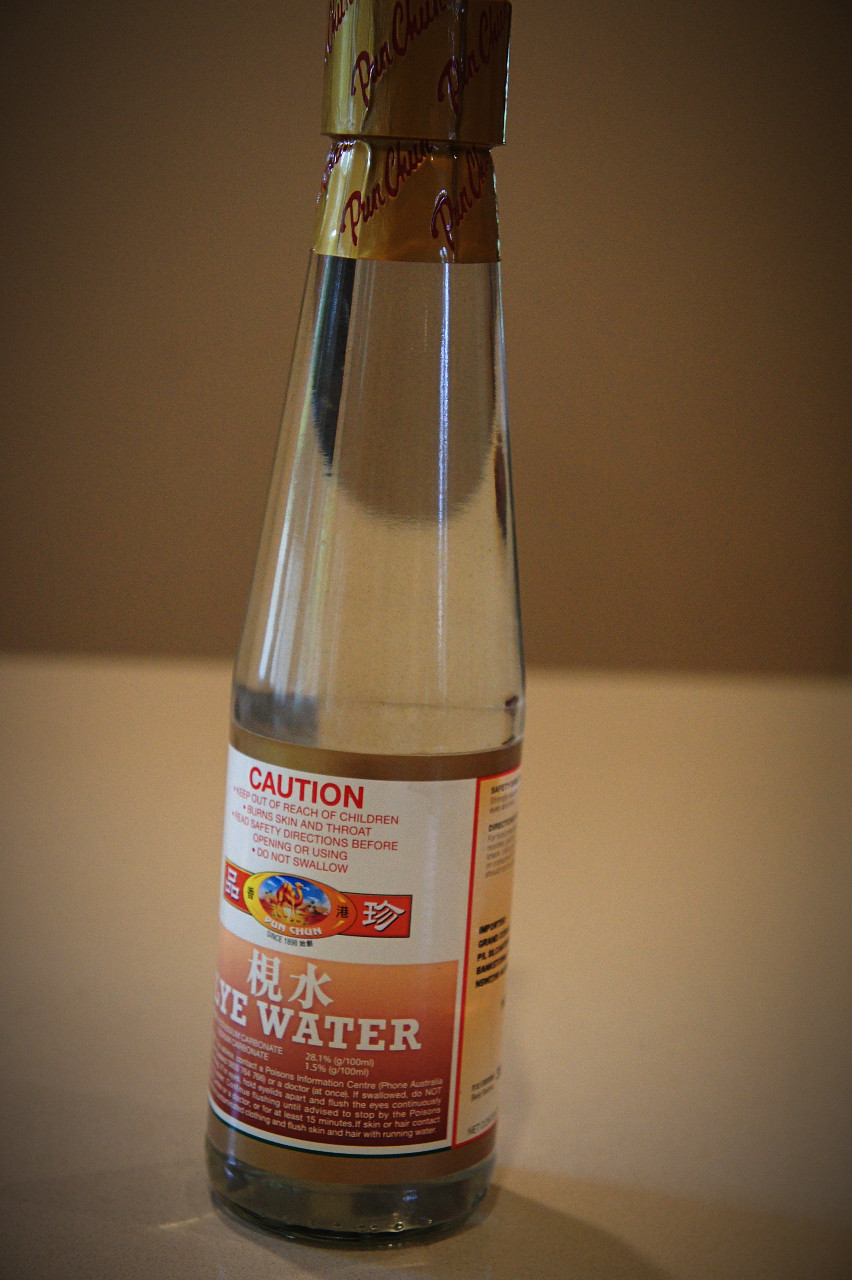
- 1/2 tsp of lye water (also known as ‘kansui,’ lye water, alkaline solution, or 枧水), which can be found at Asian stores
- 1/2 tsp of salt
For the sauce, you’ll need:
- Dark soy sauce (1 portion)
- Sesame oil (1 portion)
And for garnish:
- Toasted sesame seeds
Making the dough
To prepare the dough for your homemade noodles in a bread maker (or by hand):
- Mix the lye water with hot water and pour it into the bread maker.
- Add the flour and 1/2 tsp of salt to the bread maker.
- Use the dough setting on the bread maker to knead the dough, which will take approximately 10-20 minutes.
- Once the dough is ready, wrap it and leave it in the fridge to rest for 2-3 hours. This resting period allows the dough to relax and develop its texture, making it easier to work with when you’re ready to roll out the noodles.

Roll out the noodles
Using a pasta machine to roll and cut the dough for your homemade noodles is a great approach. Here’s a step-by-step guide:
- After the dough has rested in the fridge for 2-3 hours, remove it and cut it into smaller portions for easier handling.
- Take one portion of the dough and flatten it slightly with your hands.
- Dust your work surface and the dough with flour to prevent sticking.
- Begin by rolling out the dough into a flat sheet using a rolling pin. It should be thin but not too thin; aim for your desired noodle thickness.
- Once you have a flat sheet of dough, feed it through the pasta machine at the widest setting. This helps to flatten and smooth the dough.
- Gradually decrease the thickness setting on the pasta machine, passing the dough through each setting until you achieve the desired thickness for your noodles.
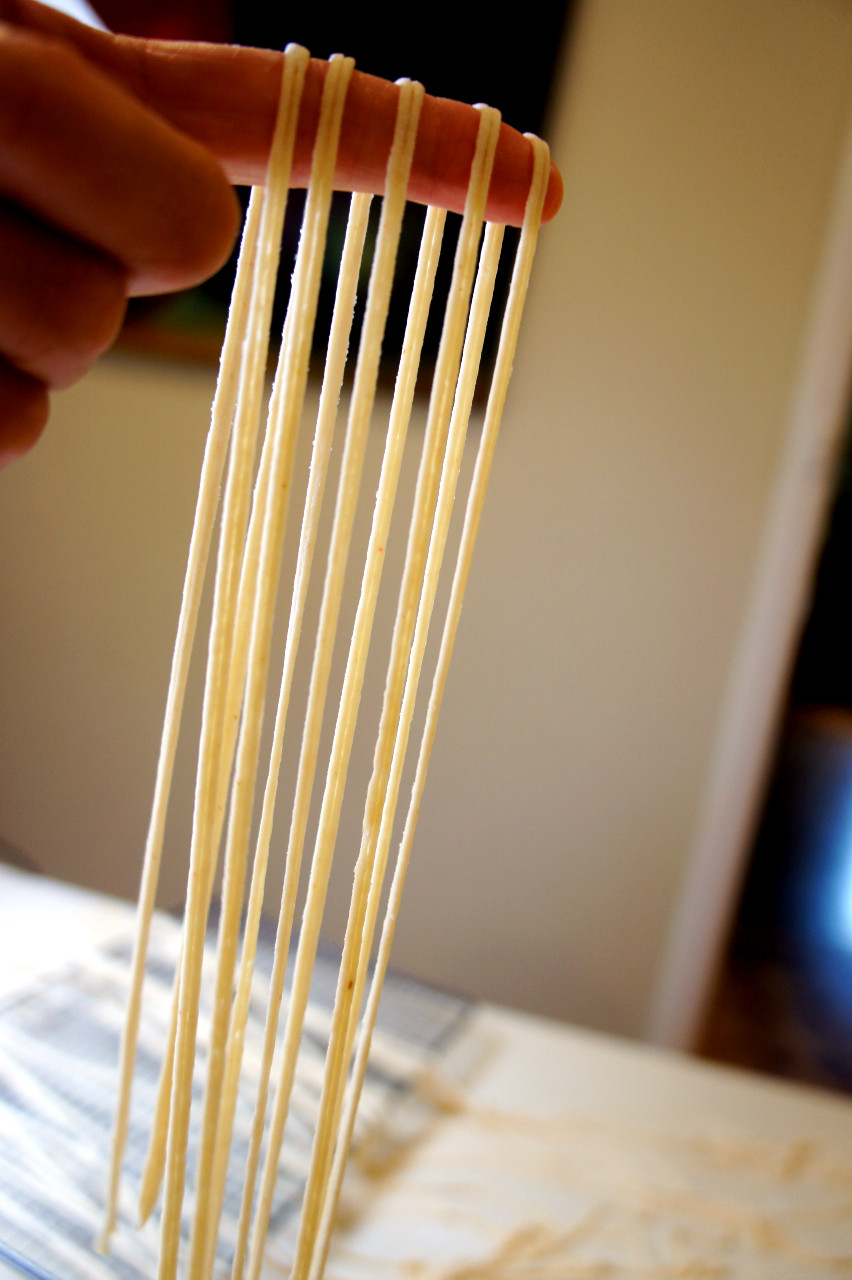
- Once the dough is at the desired thickness, switch to the noodle-cutting attachment on your pasta machine, or cut the dough into your preferred noodle shape by hand.
- As you cut the noodles, dust them with flour to prevent them from sticking together.

Cooking the noodles
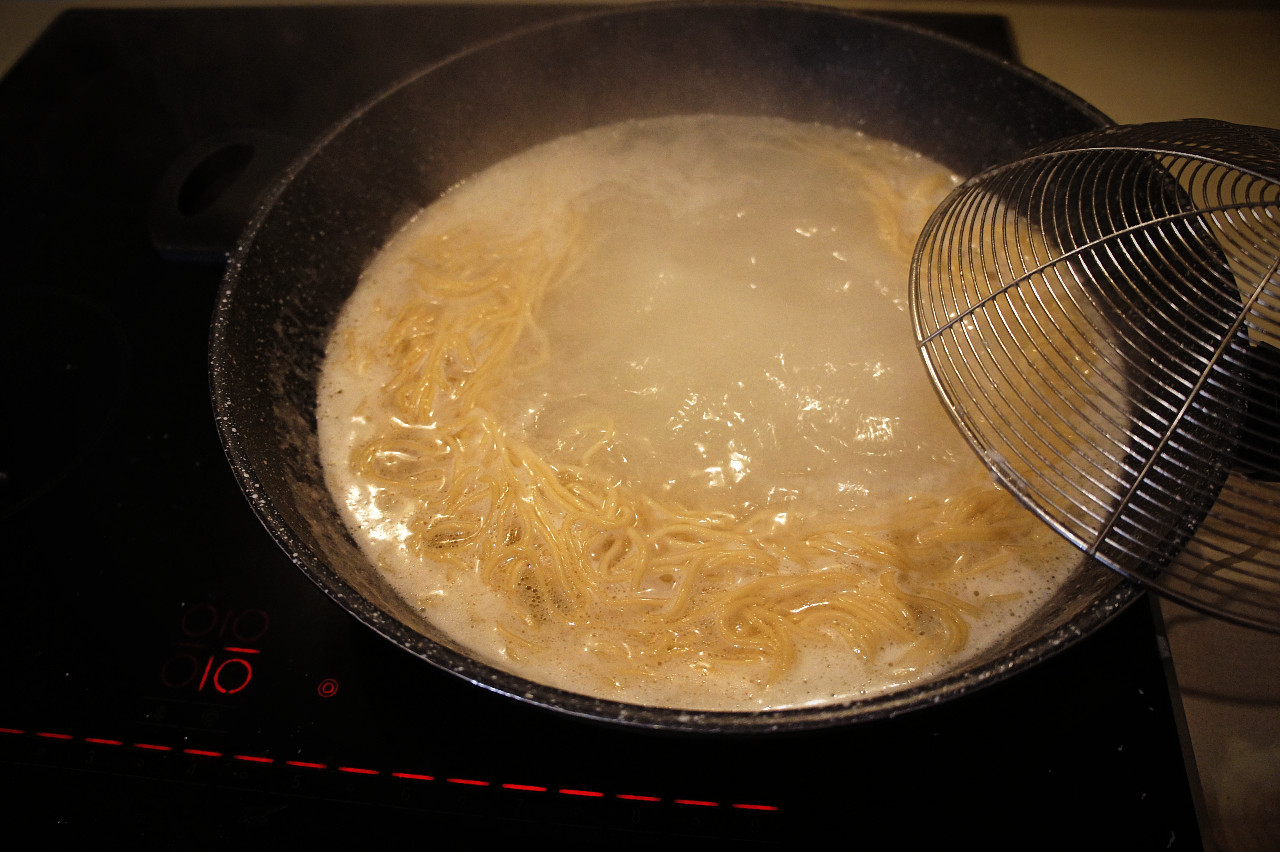
- Bring a large pot of water to a boil and add salt.
- In small batches, carefully drop the fresh noodles into the boiling water.
- Cook the noodles for approximately 2 minutes, stirring occasionally.
- Once the noodles are cooked, use a sieve to scoop them out and rinse them under cold water. Shake off any excess liquid.
- In a mixing bowl, toss the cooked noodles with a splash of dark soy sauce and a dash of sesame oil for flavour.
- Garnish your noodles with toasted sesame seeds for an extra layer of taste and texture.
Enjoy your homemade noodles with this simple yet flavorful preparation!

 delish Home Cook - happiness is homemade
Leave a comment